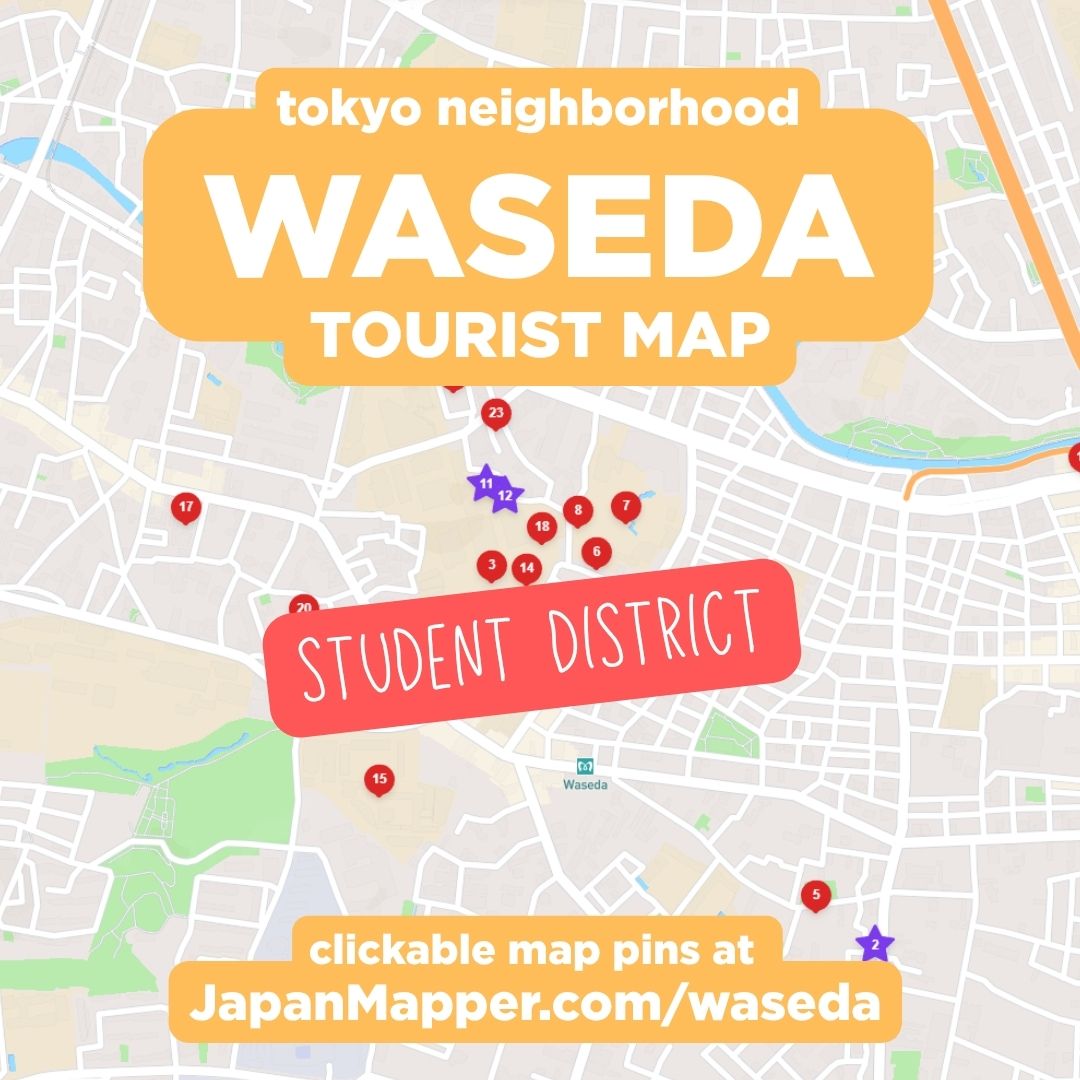
Tokyo’s glossy marketing keeps funneling everyone into Shibuya’s neon crosswalks or the synthetic theme park of Akihabara. Waseda doesn't care about any of that. Wedged between Shinjuku’s chaos and the sleepy banks of the Kanda River, this neighborhood operates on a weird duality: raw intellectual prestige and cheap, carb-heavy grit. It is one of the few central hubs where Tokyo’s mid-century pulse is still kicking, driven by thousands of broke students, aging academics, and decades of stubborn neighborhood history.
Radicals, Red Brick, and Cheap Carbs
If you want curated pop-ups and influencers blocking sidewalks, stay in Omotesando. Waseda exists because of Waseda University, one of Japan’s heavyweight academic powerhouses, but the town refuses to act bougie. The air smells like roasted barley tea, aged book paper, and hot pork fat sputtering in black cast iron.
Step fifty paces off the university’s manicured brick courtyards and you drop straight into a maze of Showa-era backstreets. One block is lined with dusty academic print shops and towering stacks of vintage philosophy journals; the next has a hand-painted wooden sign for a ramen joint that hasn't changed its oil recipe since 1978. It feels distinctly unbothered by tourism.
An Ivory Tower Built on Political Rebellion
Waseda wasn’t founded to train obedient bureaucrats; it was built in 1882 by Okuma Shigenobu, a rebel statesman who got purged from the Meiji government and wanted an independent counterweight to elite state-run universities.
By the late 1960s, Waseda became ground zero for the Zenkyoto student movement. Thousands of radicalized students threw barricades across campus streets, clashed with riot police in the rain, and shut down lectures over tuition hikes and the US-Japan security treaty. That defiant undercurrent never fully died. The neighborhood never sanitized itself into a sterile corporate campus; the cheap kissaten and dive bars still bear the cigarette stains and scuffed stools where those debates played out.
The Broke Student Fuel: Aburasoba and Pork Grease
Nobody in Waseda is eating dainty multi-course lunches. Survival here runs on fast, salty, heavy carbohydrates designed to carry a 20-year-old through a four-hour lecture.
- Aburasoba (Tokyo Noodles): Soup-less ramen built on a thick layer of seasoned lard and shoyu hiding beneath piping-hot, thick-cut wheat noodles. You don't sip it; you splash raw vinegar and chili oil over the bowl, stir violently until it emulsifies into a glossy glaze, and inhale it in six minutes flat. Spots like Menyei or the legendary Tokyo Menchi are institutions here.
- Waseda Katsu: A neighborhood rite of passage at places like Kitchen Nankai or Oshou, where deep-fried pork cutlets arrive smothered under pitch-black, bitter-rich roux, served on a mountain of shredded cabbage. It is unapologetic, heavy comfort food made for empty pockets.
Murakami’s Melancholy and Real-Life Source Material
Before Haruki Murakami became a globally translated novelist, he was a student here studying theater arts, wandering these exact alleys and listening to imported jazz records. Waseda is the physical anchor for his breakout novel, Norwegian Wood—the quiet residential corners, the student dormitories, and the tram tracks all reflect his time drifting through the neighborhood during the political unrest of the late 1960s.
Beyond modern literature, Waseda’s vintage Toden Arakawa Line (Tokyo's last surviving tramway) and the riverside slopes along the Kanda River regularly show up in anime and romance dramas as the visual shorthand for nostalgic, unhurried Tokyo life.
Three Alleys You Will Walk Right Past
Most day-trippers march from the subway directly to Okuma Auditorium and turn right back around. Skip the obvious courtyard and check these out instead:
- Ana Hachimangu’s Hidden Torii Steps: While crowds visit during the winter solstice for wealth charms, on normal afternoons this massive hillside shrine is quiet, framed by stone steps cutting steeply into the cliffside.
- Kanda River Dye Alleys (Takata): Walk down the slope toward the river into the old dyeing district. Small, unmarked workshop fronts still practice traditional Edo Komon stencil-dyeing, rinsing textiles along the historic canal route.
- Waseda Shochiku Cinema: A scruffy, neon-lit revival movie house running double-feature cinema prints on vintage projection gear since 1951. Buy a ticket, grab a canned black coffee, and watch arthouse cinema with elderly film buffs and quiet students.
The "Direct Walk From Shinjuku" Trap
The biggest mistake first-timers make is glancing at a map, seeing that Waseda is technically in Shinjuku Ward, and thinking, "We'll just stroll over from Shinjuku Station."
Don't do it. Shinjuku Ward is massive. Walking from the main station takes you through nearly 45 minutes of monotonous concrete hills, apartment blocks, and hospital complexes. You’ll burn your legs out on urban asphalt before you see anything interesting. Waseda is an isolated pocket—treat it like its own distinct destination, not a casual spillover from the central neon district.
Surviving the Run: Three Local Protocols
- Ditch the Tozai Line Rush: Avoid the Waseda Metro Station between 8:30 AM and 9:15 AM unless you want to get crushed by thousands of arriving students. Take the retro Toden Arakawa Line to its terminal stop instead; it drops you right by the river with zero crowds.
- Time the Lunch Crush: Student dining spots hit peak frenzy between 12:10 PM and 1:00 PM. Hit the ramen joints at 11:30 AM sharp or slide in after 1:45 PM to get an open bar stool without waiting in a block-long line.
- Hit the Murakami Library Early: The Waseda International House of Literature (Murakami Library), designed by Kengo Kuma, often caps walk-in entry during busy terms. Book an afternoon reservation slot online in advance, then spend the rest of the day wandering the backstreets freely.