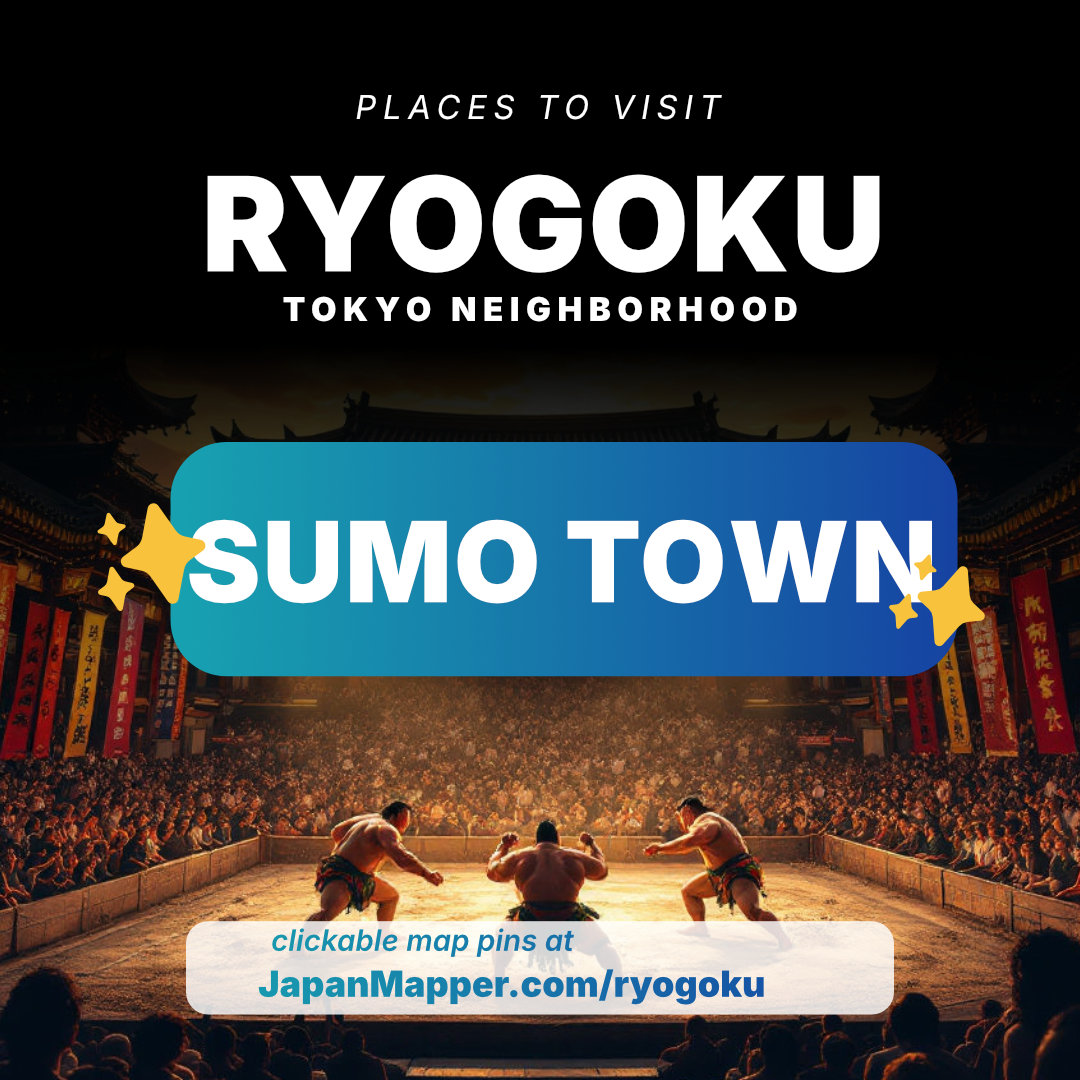
Welcome to Ryogoku! If you’re looking for a Tokyo neighborhood that packs a serious punch, you’ve found it. Famous worldwide as the beating heart of Japanese sumo wrestling, there is so much more to this riverside district than giant guys in loincloths.
It’s a neighborhood where the spirit of old Edo is still alive and kicking. You get a perfect blend of rich history, incredible food, and deep cultural experiences—all without the shoulder-to-shoulder crowds of Shibuya or Shinjuku. Let’s dive in!
🎌 What Makes Ryogoku So Special?
Ryogoku has a laid-back, unapologetically authentic vibe you won't find anywhere else in Tokyo. You might literally bump into a 300-pound sumo wrestler in a yukata while grabbing a coffee! It’s the perfect escape to experience "real" historical Tokyo, while still being a quick train ride away from Akihabara.
Pop Culture Bonus: If you binge-watched Netflix's gritty sumo drama Sanctuary or the high-energy anime Hinomaru Sumo, you've already taken a virtual tour of the Ryogoku lifestyle. The neighborhood is also the real-life home of Katsushika Hokusai, the legendary artist behind The Great Wave off Kanagawa!
📍 Absolute Must-Sees
You can't say you've been to Ryogoku without checking off these iconic spots:
- Ryogoku Kokugikan (Sumo Stadium): The undeniable centerpiece of the neighborhood. This massive arena hosts three annual Grand Sumo Tournaments. Even on non-tournament days, you can pop in to visit the free sumo museum!
- Edo-Tokyo Museum: Huge news! After a massive four-year renovation, this marvel of a museum is officially reopening on March 31, 2026. Featuring life-sized replicas of old Edo bridges and theaters, it’s hands-down the best place to learn how Edo became modern Tokyo.
- Sumida Hokusai Museum: A stunning, ultra-modern building dedicated entirely to Katsushika Hokusai. It’s a deep dive into the mind of Japan’s most legendary artist.
- Ryogoku Edo Noren: Located right inside the historic JR Ryogoku Station, this dining complex looks like an Edo-period street and has a full-sized sumo ring in the middle. It’s the perfect spot to grab chanko nabe (the hearty hot pot that fuels sumo wrestlers).
🛁 Hidden Gems & Chill Spots
Want to escape the usual tourist trail? Add these to your list:
- Edo-yu Ryogoku (Super Sento): This upscale, minimalist public bathhouse is an absolute dream. Featuring carbonated baths, a Finnish sauna, and a gorgeous mural of the Great Wave, it’s a beautifully modern way to experience Japanese bathing culture.
- Kyu-Yasuda Teien Garden: Just a stone's throw from the stadium, this serene, free-to-enter Japanese strolling garden features a tide-water pond and offers a quiet escape from the concrete jungle.
- The Japanese Sword Museum: Tucked right next to the Kyu-Yasuda garden, this sleek museum houses an incredible collection of legendary samurai swords and armor.
👻 Time Travel & Spooky Secrets
- The "Two Provinces": The name "Ryogoku" literally means "Two Provinces." In the 17th century, the Sumida River was a strict border between two regions. When the Ryogoku Bridge was built in 1659, it connected them, giving the area its name!
- The 47 Ronin: Hidden in the neighborhood is Kira-tei (Lord Kira’s Residence). This is the exact spot where the villain of the famous 47 Ronin tale was assassinated by vengeful samurai in 1703.
- Yokoamicho Park: This beautiful park holds the Great Kanto Earthquake Memorial Museum. Because it was the site of massive tragedy during the 1923 earthquake and WWII firebombings, urban legends occasionally whisper about ghostly sightings at night.
🛑 Fact Check! Busting Ryogoku Myths
Let’s clear the air on a few things before you visit:
- Myth: Sumo wrestlers are just guys who eat too much. Absolutely false! Rikishi are elite, highly disciplined athletes. Underneath that protective layer of fat is explosive muscle, and their daily training is brutal, involving hours of full-contact sparring and intense conditioning.
- Myth: Ryogoku is only worth visiting during a sumo tournament. Not at all! While tournament season is electric, Ryogoku is a fantastic hub for art, history, and food year-round. Plus, you're actually more likely to spot wrestlers riding bicycles or walking the streets during the off-season!