Barysan: The Towel-Wearing Bird That Accidentally Became One of Japan’s Smartest City Brands
January 28, 2026 (9mo ago)
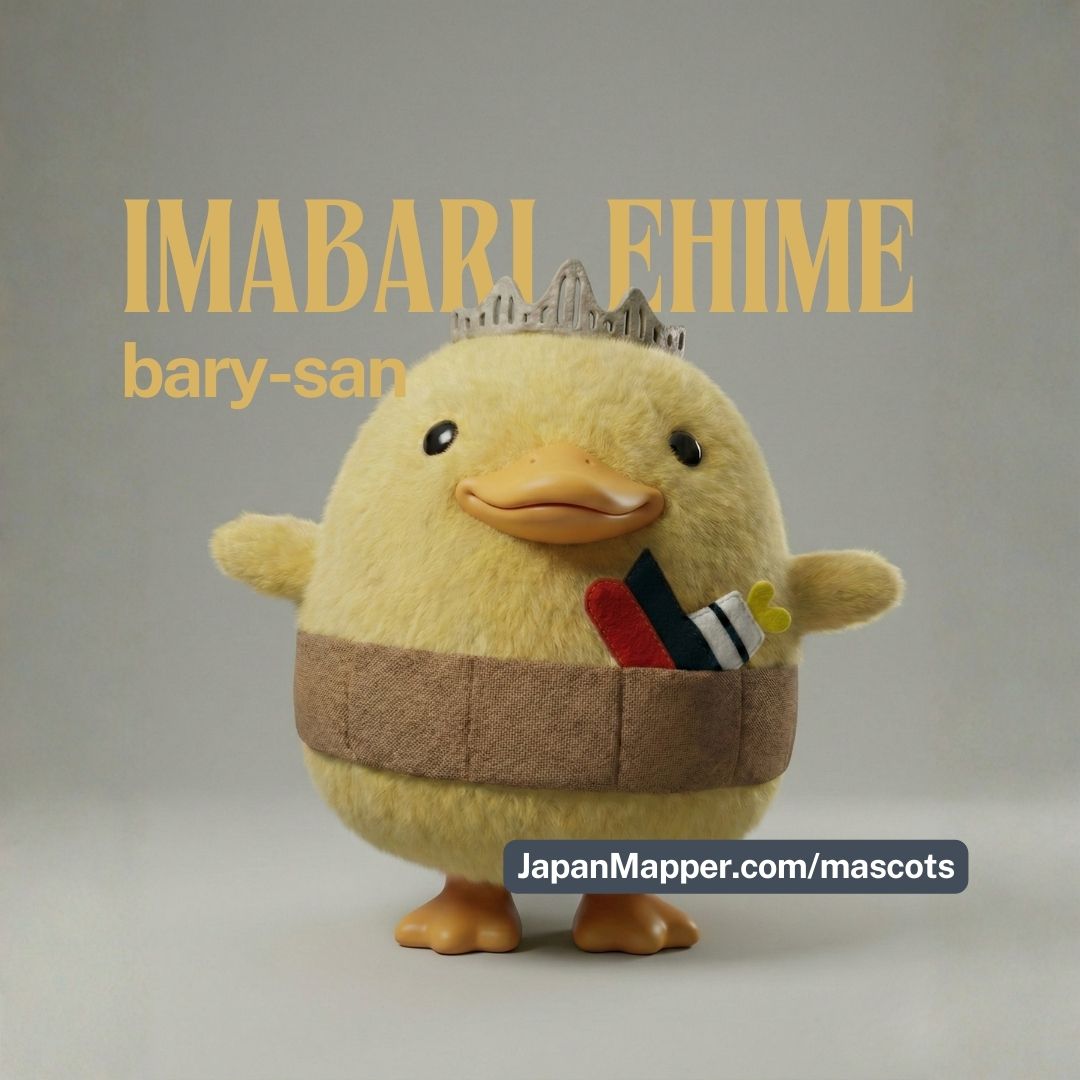
To the casual observer, Barysan (バリィさん) is just a cute, round bird. But to the locals of Imabari City, he is a cultural mirror.
While many mascots are created in boardrooms to sell products, Barysan was born from the specific lifestyle and atmosphere of the Seto Inland Sea. He captures the warmth, the food, and the slow-paced rhythm of life in Ehime Prefecture. He isn’t just a logo; he is the "local uncle" who knows all the best food spots.
The Dark Humor of "Soul Food"
The most defining cultural trait of Barysan is a joke that outsiders often miss: Why is he a chicken?
Imabari City is famous for Imabari Yakitori. unlike the rest of Japan, where chicken is skewered and grilled over charcoal, Imabari locals grill chicken on flat iron griddles (teppan) and serve it loose. It is the city's "Soul Food," boasting one of the highest densities of yakitori restaurants per capita in Japan.
Barysan is a chicken representing a town that loves to eat chicken. This touch of dark, self-aware humor is deeply embedded in Japanese regional culture, where mascots often embody the "cycle of life" of their region’s agriculture. It turns a cute character into a walking conversation about local gastronomy.
The Towel as a Symbol of "Omotenashi"
Barysan wears a hara-maki (belly warmer) made of Imabari Towel fabric. While this is an economic nod to the textile industry, culturally, it represents Omotenashi (hospitality).
In Japan, a high-quality towel is a quintessential gift—a symbol of care, cleanliness, and comfort. By wearing the city’s most famous gift, Barysan embodies the "softness" of the region. He represents a city that prides itself on welcoming pilgrims (Ohenro) and cyclists with comfort and warmth.
The Crown: A Gateway to the Islands
The crown on his head isn't about royalty; it’s a stylized version of the Kurushima-Kaikyō Bridge. Culturally, this bridge is the heart of the Shimanami Kaido—the world-famous cycling route that connects Japan's main island to Shikoku.
This transforms Barysan from a static statue into a symbol of connection and travel. He represents the weekend cyclists crossing the sea, the island-hopping lifestyle, and the stunning views of the Seto Inland Sea that define the local identity.
Personality: The "Iyokiben" Spirit
Barysan’s name comes from the local dialect suffix "Bari" (meaning "very"). But his personality is pure Iyokiben (Ehime dialect/character).
The people of the Seto Inland Sea are known for being nonbiri (laid-back/easygoing) due to the warm climate. Barysan reflects this. He is never manic or hyperactive. He is slow, polite, and slightly placid. He embodies the "slow life" of Shikoku—a cultural counter-weight to the frantic energy of Tokyo or Osaka.
The "Teppan" Statistic: Imabari is ranked as one of Japan’s "Top 3 Yakitori Cities" (alongside Muroran and Higashimatsuyama). However, it is the fastest service style because the iron griddle cooks chicken faster than charcoal. Barysan’s round shape mimics the weight and stability of these iron griddles.
Final Thoughts: A Mascot You Can Feel
Barysan succeeds because he isn't an abstract concept; he is a collection of sensory memories.
When locals look at him, they taste the savory iron-grilled chicken. They feel the soft texture of a fresh towel. They hear the local dialect and see the bridge spanning the blue sea. He is the genius loci (spirit of the place) trapped in the body of a round yellow bird.