Hikonyan Guide: The Samurai Cat Behind Hikone's Tourism Boom
January 23, 2026 (9mo ago)
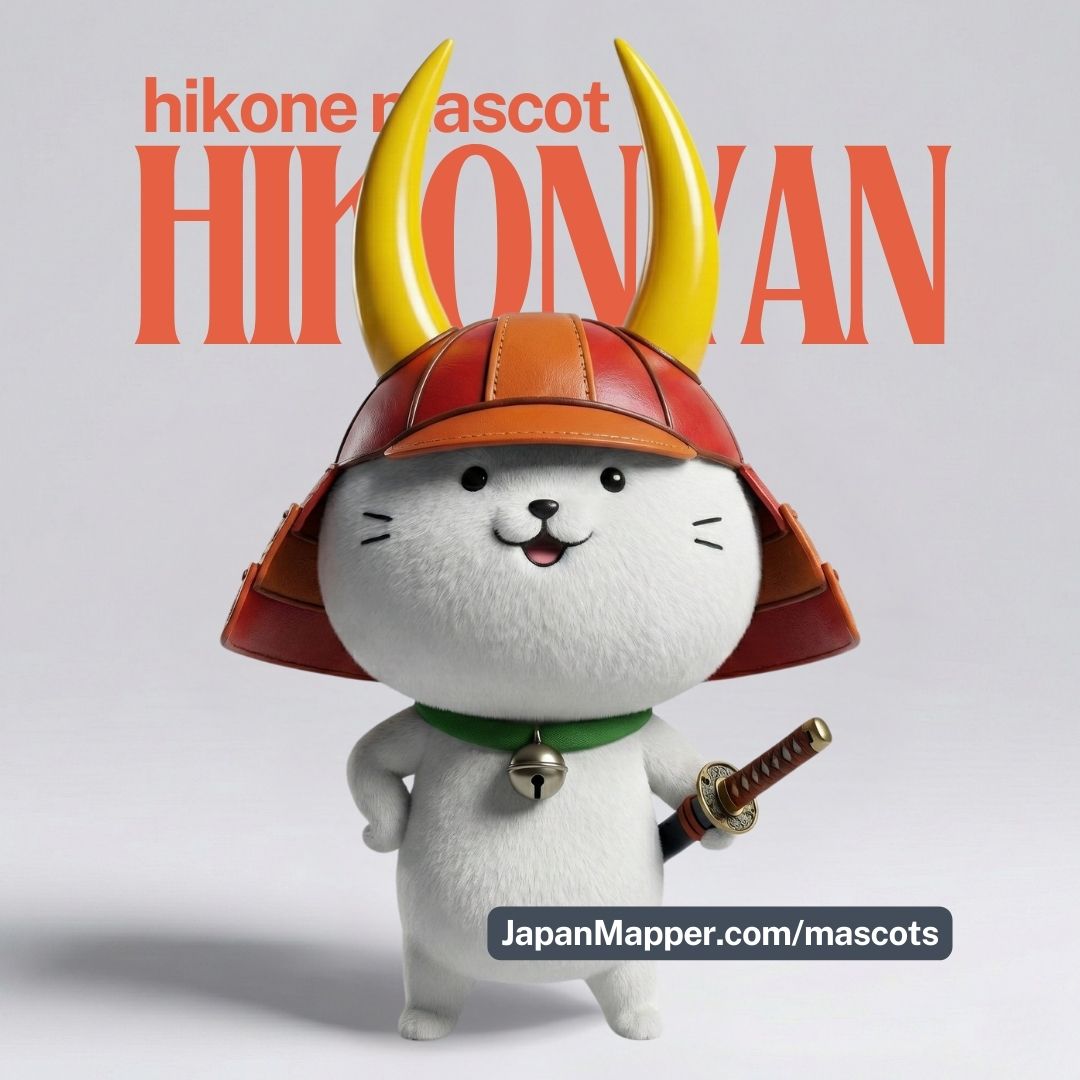
Hikonyan (ひこにゃん) is more than just a cute souvenir; he is the "godfather" of Japan’s modern mascot culture.
Created in 2007 to celebrate the 400th anniversary of Hikone Castle, this white cat in a red samurai helmet didn't just promote a city—he revitalized an entire regional economy. This guide covers the history, the staggering economic statistics, and the hidden secrets of Japan’s most successful samurai cat.
Who is Hikonyan? (The Origin Story)
Hikonyan is the official mascot of Hikone City in Shiga Prefecture. His design is a deliberate fusion of local history and folklore:
- The Name: A portmanteau of "Hiko" (from Hikone) and "Nyan" (the Japanese sound for a cat’s meow).
- The Helmet: He wears the iconic red "Kabuto" helmet of the Ii Clan, the samurai lords who ruled Hikone. specifically modeled after the armor of Ii Naomasa.
- The Legend: He is based on a local tale about Lord Ii Naotaka. During a storm, a white cat beckoned the Lord into a temple, saving him from a lightning strike that hit the tree he was standing under moments before. Hikonyan is the modern incarnation of that "Beckoning Cat" (Maneki-neko).
The "Hikonyan Effect": Analytics & Economic Impact
This section covers the specific data that proves Hikonyan's value beyond just "cuteness."
Hikonyan is cited by economists as a prime example of successful regional branding. His debut created a phenomenon now known as the "Hikonyan Effect."
1. The Tourism Surge (2007)
In the year of his debut, visitors to Hikone Castle skyrocketed.
- Visitor Increase: Attendance jumped by 61%, reaching approximately 849,000 visitors in a single year.
- Sustained Growth: Even after the anniversary year, annual tourism remained elevated by over 200,000 visitors per year compared to pre-Hikonyan levels.
2. The Multi-Billion Yen Cat
The financial impact of this single character is staggering for a small castle town.
- Direct Revenue: Tourism revenue directly linked to Hikonyan is estimated at ¥17.4 billion (~$115 million USD).
- Total Economic Impact: When including secondary effects (hotels, transport, local manufacturing), the figure rises to ¥33.8 billion (~$225 million USD).
- Merchandise Power: By 2008, merchandise sales alone had hit ¥1.7 billion.
Cultural Significance: The "Yuru-Chara" Pioneer
Hikonyan is widely credited with kicking off the Yuru-Chara (loose/gentle character) boom that swept Japan in the 2010s.
- The First Champion: In 2010, he won first place at the inaugural Yuru-Chara Grand Prix, beating hundreds of other mascots.
- The Archetype: Before Hikonyan, mascots were often stiff corporate logos. Hikonyan proved that a mascot could have a personality ("slow and loose"), which inspired successors like Kumamon and Funassyi.
- Global Ambassador: He has represented Japan abroad, from the Japan Expo in Paris (2013) to tourism campaigns in Honolulu, Hawaii.
Insider Trivia: Things You Didn't Know About Hikonyan
- The "Mochi" Nickname: While his official name is Hikonyan, castle staff and die-hard fans affectionately call him "Mochi" because his round, white, soft head looks exactly like a Japanese rice cake.
- Celebrity Status: Hikonyan receives the royal treatment. He has dedicated attendants who groom his fur before appearances, and he receives over 10,000 New Year’s Cards (Nengajo) annually from fans—each of which he (his staff) replies to.
- Crowdsourced Identity: His name wasn't decided by a committee; it was chosen from over 1,000 public suggestions, proving early on that community involvement was key to his success.
How to Meet Hikonyan
Unlike some mascots who are hard to find, Hikonyan works every day.
- Location: Hikone Castle (Shiga Prefecture).
- Schedule: He appears 3 times daily (usually 10:30 AM, 1:30 PM, and 3:00 PM).
- The Show: He doesn't speak or do acrobatics. His "performance" consists of slowly walking, drawing his sword (very slowly), and posing for photos.
- Note: Appearances are weather-dependent. On rainy days, he may appear in the museum lobby instead of the castle grounds.