Kumamon: The History, Stats, and Guide to Japan's Billion Dollar Bear Mascot
January 24, 2026 (9mo ago)
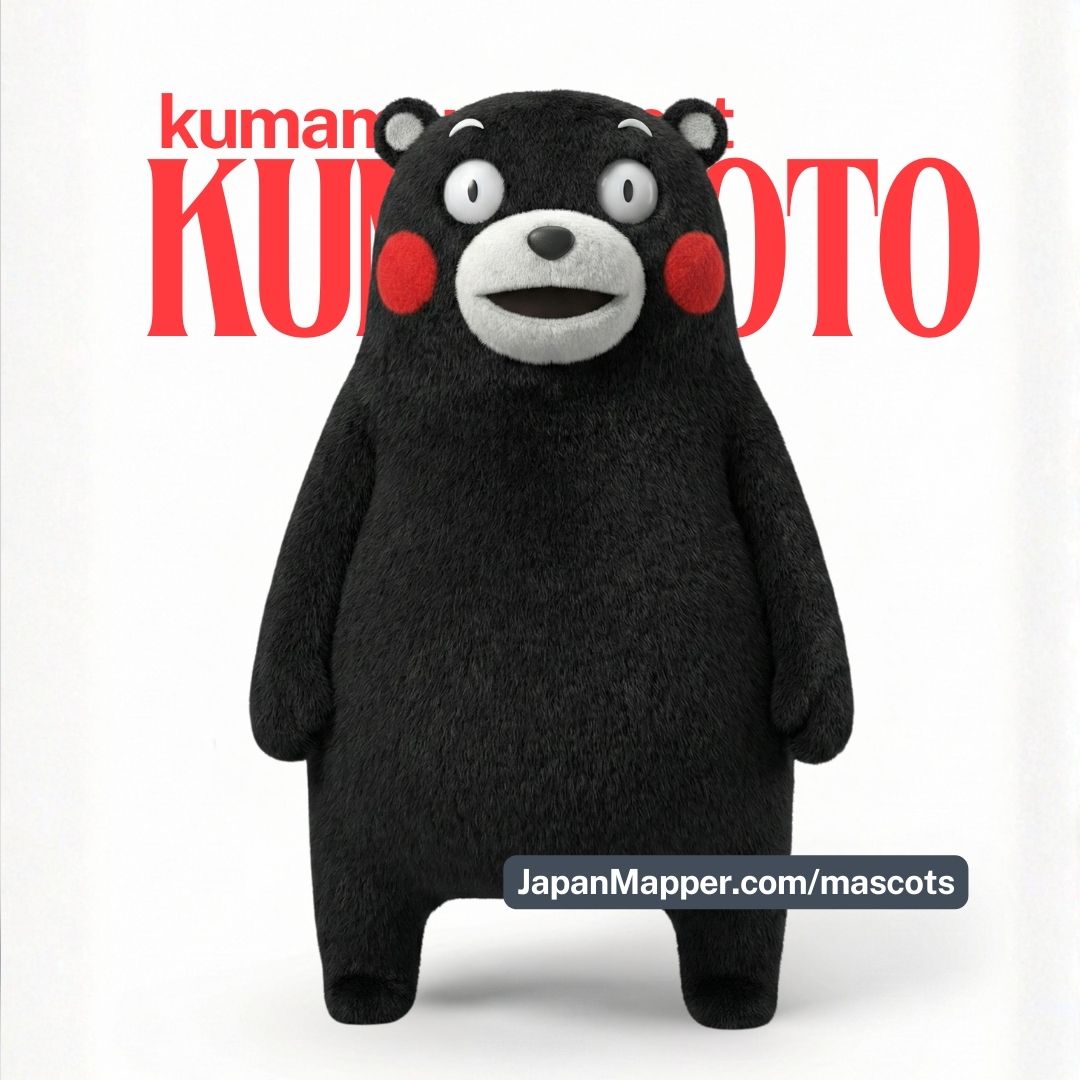
Kumamon is more than just a cute bear—he is a cultural phenomenon, a savvy marketing case study, and the official Sales Manager of Kumamoto Prefecture. If you are planning a trip to Kyushu or are simply fascinated by Japan's mascot culture (yuru-chara), this guide covers the history, the hidden statistics, and the travel tips you need.
Who is Kumamon? (The Basics)
Kumamon (くまモン) is the official mascot of Kumamoto Prefecture on the island of Kyushu. He was created in 2010 to promote the region ahead of the Kyushu Shinkansen line opening.
While most local mascots fade into obscurity, Kumamon did the opposite. He became a global icon, instantly recognizable by his black fur, surprised expression, and red cheeks.
What Does "Kumamon" Mean?
The name is a clever linguistic pun:
- Kuma (くま): Japanese for "Bear."
- Mon (モン): Kumamoto dialect for "Person" or "Thing."
- Meaning: "The Bear of Kumamoto" or "A local guy from Kumamoto."
Is He a Bear or a Cat?
Despite his minimalist design leading to some confusion, the answer is official: He is 100% boy bear. He is not a cat, nor is he a chocolate bar wrapper come to life.
The "Kumamon Economy": Analytics & Hidden Stats
Kumamon isn't just cute; he is an economic powerhouse. Here are the statistics that make him an outlier in the mascot world:
1. The 1 Trillion Yen Bear
In the decade following his debut, sales of Kumamon-branded goods have generated a cumulative 1.13 trillion yen (approx. $8–9 billion USD). In 2020 alone, despite the pandemic, Kumamon-related goods generated 169.8 billion yen.
2. The Genius "Royalty-Free" Strategy
Why is Kumamon everywhere? Unlike Mickey Mouse or Hello Kitty, Kumamon is royalty-free. Kumamoto Prefecture allows businesses to use Kumamon’s image on products for free, provided the product promotes Kumamoto prefecture or uses ingredients from the region. This "open-source" style strategy caused an explosion of visibility that traditional licensing models couldn't match.
3. He Has a Corporate Title
Kumamon is a civil servant. His official title is Sales Manager and Happiness Manager of Kumamoto Prefecture.
- Fun Fact: He was once temporarily "demoted" to Assistant Sales Manager in 2015 because he failed a public diet challenge (he failed to lose weight). He was reinstated later that year.
Personality & Design: Why He Went Viral
Kumamon's design was created by Manabu Mizuno, a famous creative director. The secret to his viral success lies in two specific traits:
The "Red Cheek" Psychology
Kumamon’s red cheeks aren't just for decoration.
- Visual Anchor: In crowded events, the red circles allow people to spot him from hundreds of feet away.
- Emotional Signaling: They represent warmth, friendliness, and the childlike excitement of a blush.
The "Stunt" Personality
Unlike older mascots who just wave, Kumamon is a "Yuru-chara" (loose character) known for slapstick comedy. He rides motorcycles, cooks on TV, bunjee jumps, and frequently "messes up." This clumsiness makes him feel human and approachable, fostering a deep emotional connection with fans.
Travel Guide: Where to See Kumamon
If you are visiting Kumamoto, you are technically entering "Kumamon's territory."
1. Kumamon Square (The HQ) Located in the Tsuruya Department Store building, this is his official office.
- What to do: You can sit at his desk, read his mail, and watch his scheduled stage performances (usually twice a day when he is in town).
- Tip: Arrive 30 minutes early; the venue often hits capacity.
2. Kumamoto Station The station features a giant Kumamon head for photo ops and a dedicated souvenir shop (Kumamon Station) selling exclusive train-themed merchandise.
3. Everywhere Else From hotel amenities and toilet paper wrappers to the side of Japan Airlines planes, he is ubiquitous in the region.
The Serious Side: Kumamon & The 2016 Earthquake
Kumamon’s most important role came after the devastating 2016 Kumamoto Earthquakes.
- The Silence: Immediately after the quake, the official Kumamon Twitter account went silent to prioritize emergency info. Fans worldwide tweeted "PrayForKumamoto," asking "Where is Kumamon?"
- The Return: When he finally visited evacuation centers weeks later, his presence reportedly brought the first smiles to children’s faces since the disaster.
- Impact: He became a symbol of "Fukkou" (Recovery), leading fundraising efforts that gathered millions for the region's reconstruction.
Final Thoughts
Kumamon is proof that branding, when paired with genuine emotion and a clever business model, can transcend marketing. He is not just a mascot; he is a hardworking civil servant dedicated to the happiness of his prefecture.