Lerch-san: The Unlikely Mascot Who Made Niigata Japan’s Snow Capital
January 26, 2026 (9mo ago)
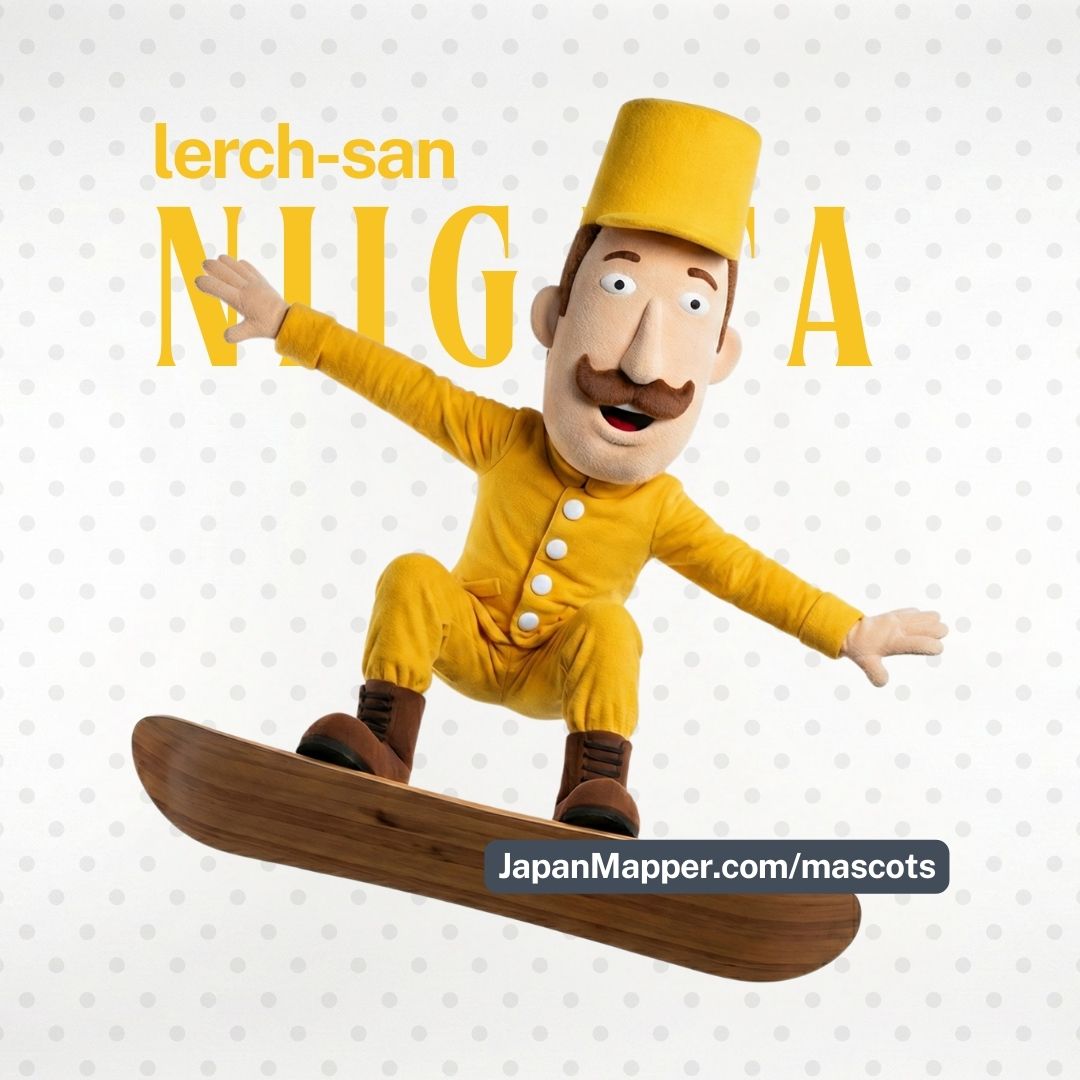
In the colorful world of Japanese yuru-kyara (mascots), where round shapes and blushing cheeks reign supreme, one character literally stands above the rest.
Lerch-san (レルヒさん) is the official tourism mascot of Niigata Prefecture. Modeled after Theodor Edler von Lerch, an Austro-Hungarian military officer, he is credited with introducing modern skiing to Japan in 1911.
At first glance, Lerch-san looks nothing like a mascot. He is towering, serious, and dressed in a vintage European military uniform. He resembles a historical reenactor more than a cuddly brand ambassador. Yet, this visual anomaly is precisely why he has become a marketing triumph.
The Real History: Anchoring Brand Identity in Fact
Most mascots are purely fictional creations designed to be hugged. Lerch-san, however, is a walking history lesson.
In January 1911, Major Theodor von Lerch taught skiing techniques to the Japanese Imperial Army in Takada (modern-day Jōetsu City, Niigata). This event is historically recognized as the birth of skiing in Japan.
Niigata Prefecture—famous for heavy snowfall and premier resorts like Myoko and Naeba—leveraged this historical event to anchor its brand identity. Lerch-san isn’t just a character; he is a proof point that positions Niigata not just as a snowy region, but as the authentic birthplace of Japanese ski culture.
The Psychology of the "Un-Japanese" Design
Why does a stern, mustached European man work as a Japanese mascot? The answer lies in cognitive dissonance and the "Kimo-kawaii" (gross-cute) phenomenon.
Standard Japanese mascots rely on the "Baby Schema" (round faces, large eyes, pastel colors) to trigger nurturing instincts. Lerch-san breaks every one of these rules:
- Proportions: Elongated and human-like.
- Expression: Stoic and semi-realistic rather than perpetually smiling.
- Attire: Specific historical military gear rather than fantasy costumes.
From a branding psychology perspective, this contrast creates a "narrative gap." When consumers ask, "Why does this serious guy represent Niigata?", they engage in active curiosity—a marketer's gold standard. He is memorable because he is slightly uncomfortable.
Targeting Adults: A Strategic Pivot
A subtle but critical insight into Lerch-san’s success is his target demographic. While most mascots aim to captivate children, Lerch-san is engineered for adults and international tourists.
Niigata’s tourism economy relies heavily on skiers, snowboarders, and history buffs—groups that value authenticity over cuteness. Lerch-san’s marketing persona is dry, self-aware, and often ironic. This aligns him closer to the "weird twitter" style of marketing, appealing to social media users who enjoy the absurdity of a 9-foot-tall Austrian man looming over kawaii characters at tourism expos.
By The Numbers
To understand Lerch-san’s impact, we must look at the statistics and design specs that usually go unnoticed.
- Height Economics: Lerch-san stands approximately 270cm (roughly 8'10") tall. This is not random; it makes him visible from across crowded convention halls where standard 160cm mascots get lost in the pack. He literally dominates the visual field of any PR event.
- The "Kimo-Kawaii" Wave: Lerch-san debuted around 2009, coincidentally riding the crest of the kimo-kawaii (creepy-cute) trend popularized by characters like Kobito Dukan. He was ahead of the curve in "ironic mascot" marketing.
- The "Straight Man" Ratio: In comedy duos (Manzai), there is a boke (funny man) and tsukkomi (straight man). Analytics of social media engagement show that photos of Lerch-san with cute mascots perform better than solo shots. His seriousness amplifies the cuteness of others, making him the ultimate "Straight Man" of the mascot industry.
- Economic Context: Niigata has over 50 ski resorts, ranking it third in Japan. Using a specific historical figure helps differentiate these resorts from competitors in Nagano and Hokkaido, which rely more on landscape branding than historical branding.
Final Thoughts: Depth Over Fluff
Lerch-san proves that regional branding doesn't require "fluff" to be effective. By embracing a genuine historical narrative and a visually jarring design, Niigata created a character that educates, entertains, and differentiates.