Mikyan: The Citrus Heart of Ehime
January 27, 2026 (9mo ago)
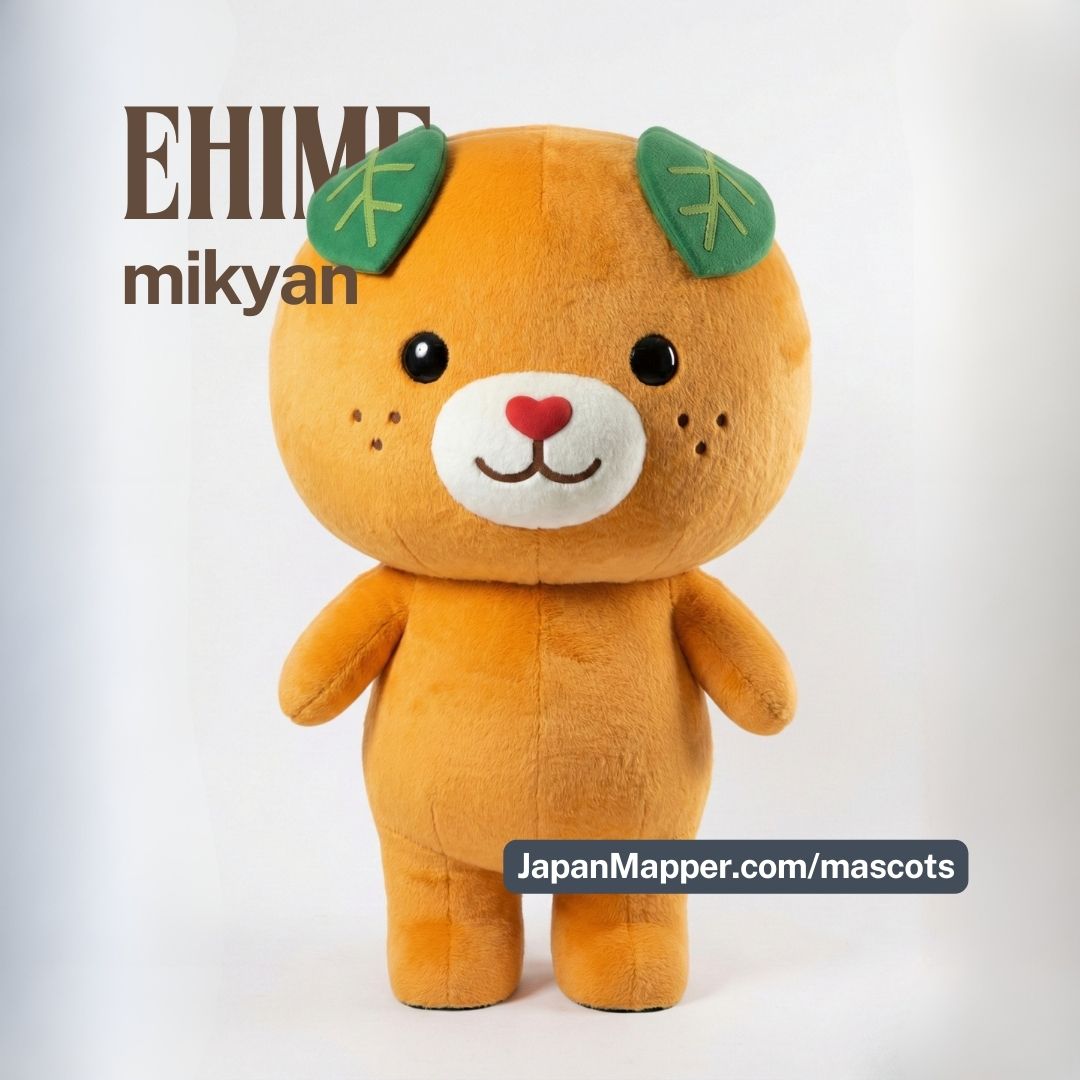
If you step off the train in Ehime Prefecture, on the quiet, sun-drenched island of Shikoku, you are immediately greeted by a smile. It is not a human smile, but the round, orange grin of Mikyan (みきゃん).
To the outsider, he is just another yuru-chara—one of Japan’s thousands of cuddly regional mascots. But to the locals, Mikyan is the "Citrus Kingdom" personified. He is not just a logo stamped on a box; he is a modern expression of Kyodo-ai (love for one’s hometown), designed to bridge the gap between the ancient farming traditions of the region and the modern world.
A Name That Speaks the Local Dialect
In Japan, words have power (kotodama), and Mikyan’s name is a clever cultural tapestry. It fuses "Mikan" (mandarin orange), the lifeblood of Ehime’s economy, with "Kyan," the sound of a playful puppy.
But the genius lies in the softness of the sound. The Ehime dialect (Iyoben) is known for being soft, warm, and slow-paced compared to the harsh speed of Tokyo. Mikyan’s name rolls off the tongue with that same leisurely, sun-soaked rhythm. He sounds like the place he comes from.
The Art of "Iyashi" (Healing) Design
Why does looking at Mikyan make you feel calm? It is a cultural concept called Iyashi—psychological healing.
Ehime faces the Seto Inland Sea, a body of water known for being exceptionally calm and mirror-like. Mikyan’s design mirrors this landscape. He lacks the chaotic energy of other mascots (like the hyperactive Funassyi). His round features and warm orange palette mimic the glowing sun over the Setouchi waters. He is designed not to excite you, but to soothe you—a "visual hot spring" for the tired traveler.
The Legend of the Faucet (Cultural Integration)
Mikyan is the keeper of Ehime’s favorite urban legend. For decades, Japanese children joked that in Ehime—the fruit capital—orange juice flows from the tap instead of water.
Rather than denying the myth, Ehime brought it to life. At Matsuyama Airport and tourist hubs, you will find "Mikyan Faucets." You turn the handle, and fresh juice pours out. This isn't just a tourist trap; it is a celebration of the region's abundance. It transforms a mundane act (washing hands) into a magical cultural interaction, with Mikyan acting as the guardian of the magic.
The Shadow on the Sun: The "Darkyan" Drama
Japanese culture loves a balance of light and dark, and even Mikyan is not immune to this. This is the "not so obvious" layer that most tourists miss.
Mikyan has a canonical rival: Darkyan. Darkyan is moldy, sour, and cynical—the antithesis of fresh citrus. This rivalry turns the mascot from a static image into a living theater. They stage mock battles at local festivals. It mirrors the structure of anime or kabuki theater: the protagonist needs a foil to shine.
The Statistic that Matters: This drama is why Mikyan is a heavyweight. In the 2015 Yuru-chara Grand Prix, the Super Bowl of mascots, Mikyan garnered 6,915,774 votes. To put that in perspective, that is more votes than the population of many countries. It wasn't just a vote for a drawing; it was a massive, collective cultural cheer from the people of Shikoku.
A Symbol of "Omotenashi"
Ultimately, Mikyan is a tool of Omotenashi—Japanese hospitality.
When farmers box their oranges to ship to Tokyo or abroad, Mikyan is on the box. He acts as a traveler’s guarantee. In a culture that values trust and face-to-face connection, Mikyan stands in for the farmer. He tells the customer: "This fruit was grown with care, in a warm place, by kind people."
He is not just selling fruit. He is exporting the warmth of Ehime itself.